
 Nov 5
Nov 5
Karan Thapar
Notable person | 70 yrs
Scorpio
Read more
YouTube and Wikipedia entries are pulled live from public feeds; Facebook posts load from Facebook's own embed. Lines marked teaser are written summaries, not real posts.
Film Director
| Born | Jeffrey David Sachs, November 5, 1954 (age 71), Oak Park, Michigan, U.S. |
|---|---|
| Spouse | Sonia Ehrlich Sachs |
| Children | 3 |
| Education | Harvard University (BA, MA, PhD) |
| Doctoral advisor | Martin Feldstein |
| Discipline | Political economics, International development |
| School or tradition | Keynesian economics |
| Institutions | Harvard University, Columbia University |
| Doctoral students | Michael C. Burda |
| Notable ideas | Millennium Villages Project |
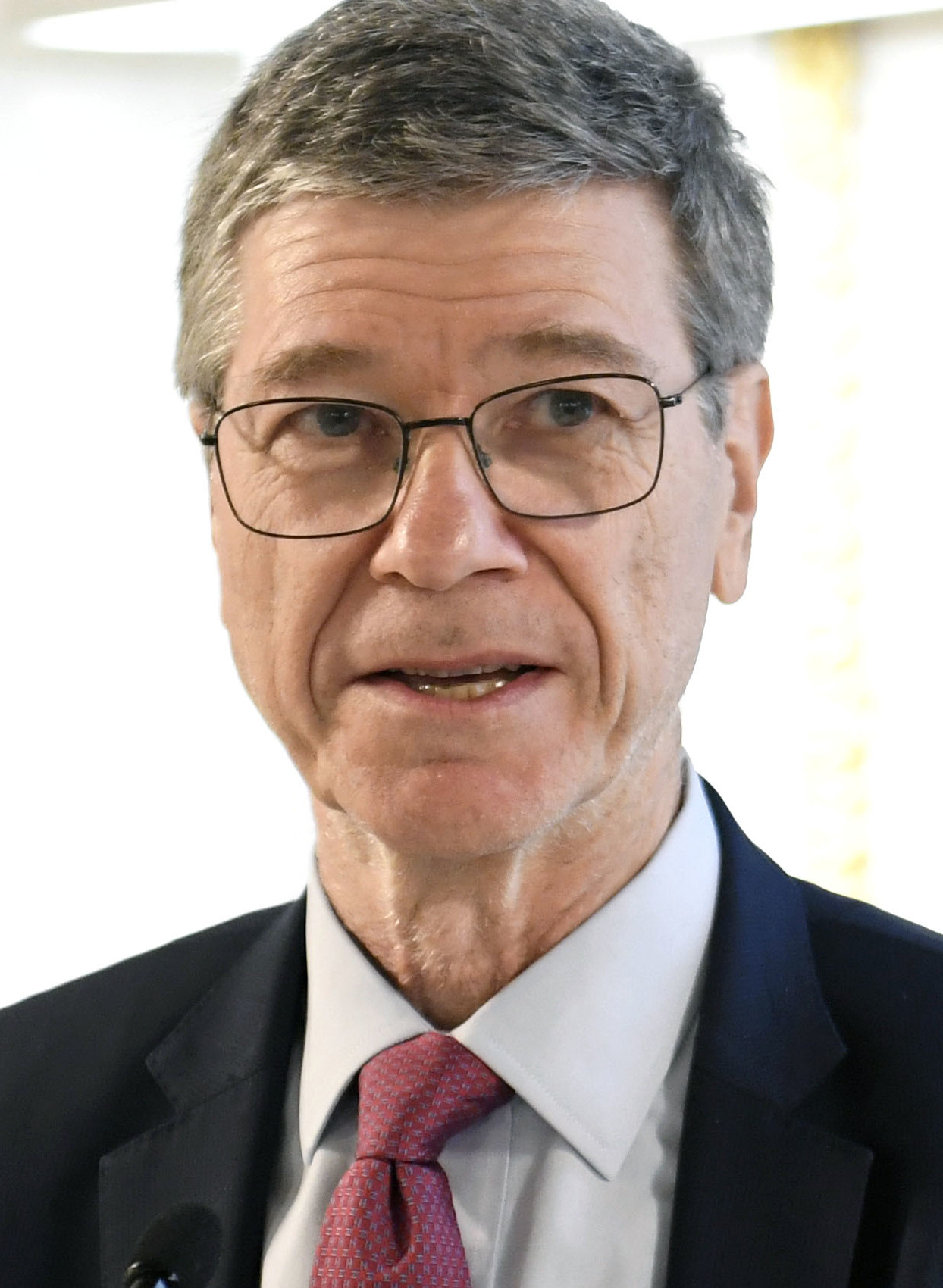
Jeffrey David Sachs ( SAKS; born November 5, 1954) is an American economist and public policy analyst. He is a professor at Columbia University, at which he was formerly director of The Earth Institute and currently director of the Center for Sustainable Development.
This profile of Jeffrey Sachs covers Early Life and Family Background, Harvard University, Columbia University, Bolivia and Advising in post-soviet economies.
From 2002 to 2018, Sachs was special adviser to the UN Secretary-General. He has been president of the UN Sustainable Development Solutions Network. Sachs is co-founder and chief strategist of Millennium Promise Alliance, a nonprofit organization dedicated to ending extreme poverty and hunger. From 2002 to 2006, he was director of the United Nations Millennium Project's work on the Millennium Development Goals (MDGs). In 2010, he became a commissioner for the Broadband Commission for Sustainable Development, whose stated aim is to boost the importance of broadband internet in international policy. He is an SDG Advocate for United Nations (UN) secretary-general António Guterres on the Sustainable Development Goals (SDGs), a set of 17 global goals adopted at a UN summit meeting in 2015.
Sachs has written many books and received several awards. His views on economics, on the origin of COVID-19, and on the Russian invasion of Ukraine have garnered attention and criticism.
Jeffrey David Sachs was born in November 5, 1954 in Detroit, Michigan. He was raised in Oak Park, Michigan, part of the Detroit metropolitan area. He is the son of Joan (née Abrams) and Theodore Sachs, a labor lawyer. His family is Jewish.
Sachs graduated from Oak Park High School before attending Harvard College, where he earned his B.A. Degree in Economics, summa cum laude, in 1976. He continued his studies at Harvard University, receiving an M.A. Degree in 1978 and a Ph.D. In 1980, both in Economics. His doctoral supervisor was Martin Feldstein.
Sachs was a junior fellow of the Harvard Society of Fellows from 1978 to 1981.
Sachs joined the Harvard faculty as an assistant professor in 1980, and was promoted to associate professor in 1982. A year later, at age 28, he became a tenured professor of economics at Harvard.
During the next 19 years, Sachs became the Galen L. Stone Professor of International Trade, director of the Harvard Institute for International Development (1995–1999), and director of the Center for International Development at Harvard Kennedy School (1999–2002).
Sachs is the director of the Center for Sustainable Development at Columbia University. He is a university professor at Columbia University. From 2002 to 2016, Sachs was director of the Earth Institute of Columbia University, a university-wide organization with an interdisciplinary approach to addressing complex issues facing the Earth, in support of sustainable and economic development.
Sachs's classes are taught at the School of International and Public Affairs and the Mailman School of Public Health, and his course "Challenges of Sustainable Development" is taught at the undergraduate level.
Before the 1985 Bolivian general election, Hugo Banzer asked Sachs to advise him on an anti-inflation plan to implement if he was elected. Sachs's stabilization plan centered on price deregulation, particularly for oil, along with cuts to the national budget. Sachs said his plan could end Bolivian hyperinflation, which had reached up to 14,000%, in a single day. Banzer lost the election to Víctor Paz Estenssoro, but Sachs's plan was still implemented. Inflation quickly stabilized in Bolivia.
Hyperinflation reduced within weeks after the Bolivian government implemented his suggestions and the government settled its $3.3 billion debt to international lenders for about 11 cents on the dollar. At the time, this was about 85% of Bolivia's GDP.
In 1989, Sachs advised Poland's anticommunist Solidarity movement and the government of Prime Minister Tadeusz Mazowiecki. He wrote a comprehensive plan for the transition from central planning to a market economy that was incorporated into Poland's reform program, led by Finance Minister Leszek Balcerowicz. Sachs was the main architect of Poland's debt reduction operation. He and IMF economist David Lipton advised on the rapid conversion of all property and assets from public to private ownership. Closure of many uncompetitive factories ensued. In Poland, Sachs was firmly on the side of rapid transition to capitalism. At first, he proposed U.S.-style corporate structures, with professional managers answering to many shareholders and a large economic role for stock markets. That did not sit well with the Polish authorities, but he then proposed that large blocks of the shares of privatized companies be placed in the hands of private banks. As a result, there were economic shortages and inflation, but prices in Poland stabilized by 1991.
In 1999, the government of Poland awarded Sachs one of its highest honors, the Commander's Cross of the Order of Merit. He received an honorary doctorate from the Kraków University of Economics.
After Poland's success, Sach's advice was sought by Soviet president Mikhail Gorbachev and his successor, Russian president Boris Yeltsin, on the transition of the USSR/Russia to a market economy.
Sachs's methods for stabilizing economies became known as shock therapy and were similar to approaches used in West Germany after WW2. He faced criticism after the Russian economy underwent significant struggles after adopting the market-based shock therapy in the early 1990s.
Since his work in post-communist countries, Sachs has turned to global issues of economic development, poverty alleviation, health and aid policy, and environmental sustainability. He has written extensively on climate change, disease control, and globalization. Since 1995, he has been engaged in efforts to alleviate poverty in Africa. According to New York Magazine
Sachs suggests that with improved seeds, irrigation and fertilizer, the crop yields in Africa and other places with subsistence farming can be increased from 1 ton per hectare to 3 to 5 tons per hectare. He said that increased harvests would significantly increase subsistence farmers' income, reducing poverty. Sachs does not believe that increased aid is the only solution. He also supports establishing credit and microloan programs, which are often lacking in impoverished areas.
Sachs is co-founder and chief strategist of Millennium Promise Alliance, a nonprofit organization dedicated to ending extreme poverty and hunger. From 2002 to 2006, he was director of the United Nations Millennium Project's work on the MDGs.
After the adoption of the Millennium Development Goals (MDGs) in 2000, Sachs chaired the WHO Commission on Macroeconomics and Health (2000–2001), which played a pivotal role in scaling up the financing of health care and disease control in the low-income countries to support MDGs 4, 5 and 6. He worked with UN Secretary-General Kofi Annan in 2000–2001 to design and launch The Global Fund to Fight AIDS, Tuberculosis and Malaria. He also worked with senior George W. Bush administration officials to develop the PEPFAR program to fight HIV/AIDS and the PMI to fight malaria. On Annan's behalf, from 2002 to 2006 he chaired the UN Millennium Project, which was tasked with developing a concrete action plan to achieve the MDGs. The UN General Assembly adopted the UN Millennium Project's key recommendations at a special session in 2005.
Source: adapted from Wikipedia (https://en.wikipedia.org/wiki/Jeffrey_Sachs), text available under CC BY-SA 4.0.
Nov 5
Notable person | 70 yrs
Scorpio
Read more Nov 5
Nov 5
Politician | 155 yrs
Scorpio
Read more Nov 5
Nov 5
Cricketer | 37 yrs
Scorpio
Read more Nov 5
Nov 5
Actor | 38 yrs
Scorpio
Read moreNotable person | 51 yrs
Scorpio
Read more Nov 5
Nov 5
Notable person | 69 yrs
Scorpio
Read more Nov 5
Nov 5
Notable person | 171 yrs
Scorpio
Read more Nov 5
Nov 5
Footballer | 54 yrs
Scorpio
Read more Nov 5
Nov 5
Musician | 69 yrs
Scorpio
Read more Nov 5
Nov 5
Footballer | 46 yrs
Scorpio
Read more Nov 5
Nov 5
Politician | 63 yrs
Scorpio
Read more Nov 5
Nov 5
Scientist | 133 yrs
Scorpio
Read more