
 Jul 8
Jul 8
Beck
Singer | 56 yrs
Cancer
Read more
YouTube and Wikipedia entries are pulled live from public feeds; Facebook posts load from Facebook's own embed. Lines marked teaser are written summaries, not real posts.
Musician
| Born | Louis Thomas Jordan, July 8, 1908, Brinkley, Arkansas, U.S. |
|---|---|
| Died | February 4, 1975 (aged 66), Los Angeles, California |
| Occupations | Musician, bandleader, songwriter, singer |
| Years active | 1932–1974 |
| Genres | Jazz, swing, jump blues, R&B, rock and roll |
| Instruments | Saxophones, vocals |
| Labels | Decca, V-Disc, Mercury, Aladdin |
| Formerly of | Tympany Five |
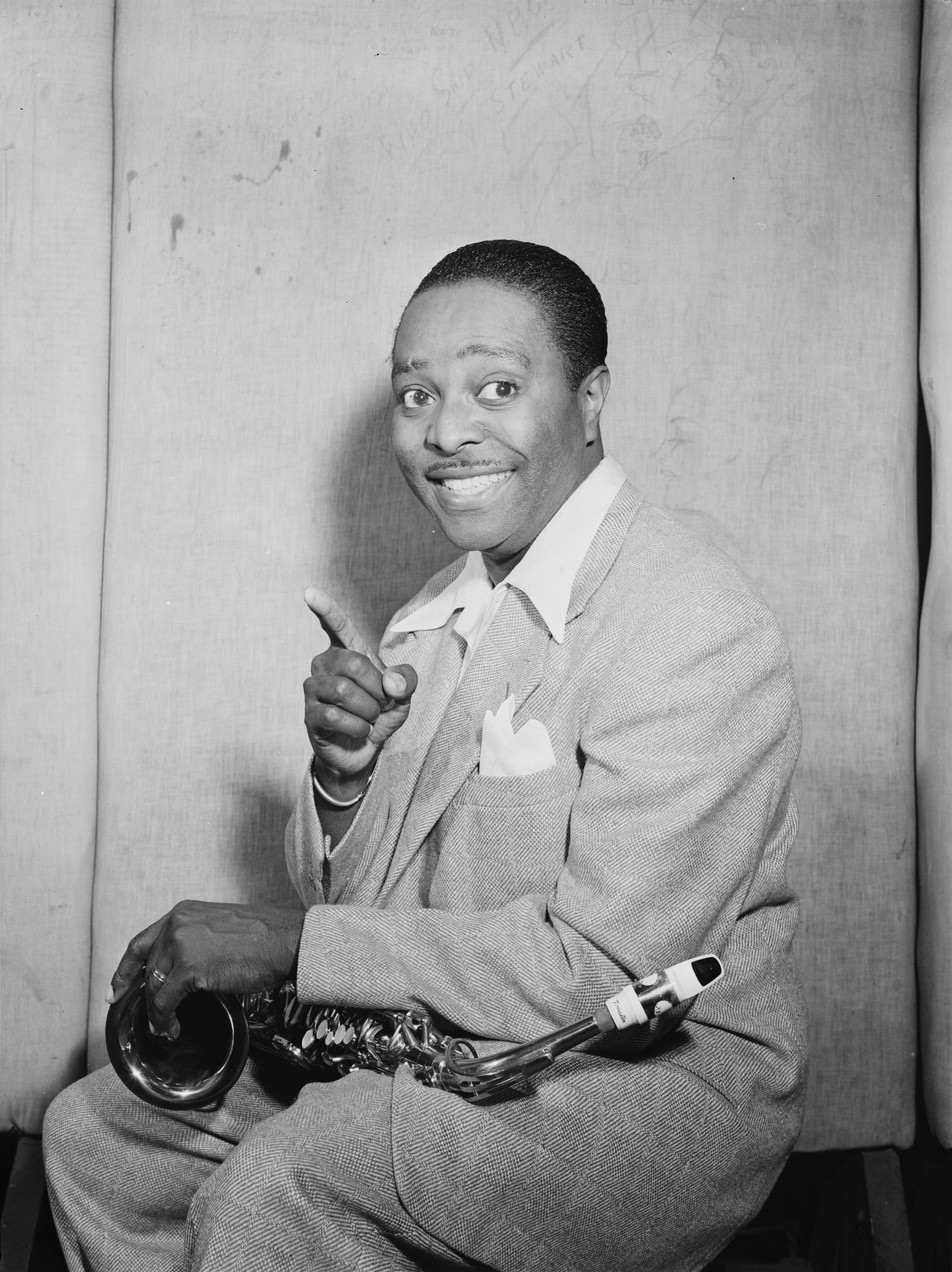
Louis Thomas Jordan (July 8, 1908 – February 4, 1975) was an American jazz, blues and jump blues saxophonist, vocalist, songwriter and bandleader who was popular from the late 1930s to the early 1950s. Known as "the King of the Jukebox", he earned his highest profile towards the end of the swing era.
This profile of Louis Jordan covers Early Life and Family Background, Career and Rise to Fame, Films, Marriage and Family Life and Financial problems.
Specializing in the alto sax, Jordan played all forms of the saxophone, as well as piano and clarinet. He also was a singer with great comedic flair, and fronted his own band for more than twenty years. He duetted with some of the biggest solo singing stars of his time, including Bing Crosby, Ella Fitzgerald, and Louis Armstrong.
Jordan began his career in big-band swing jazz in the 1930s, coming to the public's attention as part of Chick Webb's hard swinging band, though he became better known as an innovative popularizer of jump blues—a swinging, up-tempo, dance-oriented hybrid of jazz, blues and boogie-woogie. Typically performed by smaller bands consisting of five or six players, jump music featured shouted, highly syncopated vocals and earthy, comedic lyrics on contemporary urban themes. It strongly emphasized the rhythm section of piano, bass and drums; after the mid-1940s, this mix was often augmented by electric guitar. Jordan's band also pioneered the use of the electronic organ.
With his dynamic bands that he called The Tympany Five no matter how many musicians were in it, Jordan mapped out the main parameters of the classic R&B, urban blues and early rock-and-roll genres with a series of highly influential 78-rpm discs released by Decca Records. These recordings presaged many of the styles of black popular music of the late 1940s, 1950s and 1960s and exerted a strong influence on many leading performers in these genres. Many of his records were produced by Milt Gabler who, in his later production work, played Jordan's music for Bill Haley as Haley wanted to transition from country & western to rock 'n' roll resulting in Haley's huge hit, "Rock Around the Clock".
Jordan was also an actor and a film personality. He appeared in 14 three-minute Soundies filmed for "movie jukeboxes" of the 1940s. He also worked as a specialty act in the Hollywood theatrical features Follow the Boys and Swing Parade of 1946. His successful musical short Caldonia (1945) prompted three more feature films, all starring Jordan and his band: Beware; Reet, Petite and Gone; and Look-Out Sister.
Jordan ranks fifth in the list of the most successful African-American recording artists according to Joel Whitburn's analysis of Billboard magazine's R&B chart, and was the most popular rhythm and blues artist with his jump blues recordings of the pre-rock n' roll era. Though comprehensive sales figures are not available, Jordan had at least four million-selling hits during his career and regularly topped the R&B "race" charts, reaching Number 1 18 times, with 113 weeks in that spot over the years. He was also one of the first black recording artists to achieve significant crossover in popularity with the predominantly white mainstream American audience, having simultaneous top ten hits on the pop charts several times.
Jordan was born on July 8, 1908, in Brinkley, Arkansas. His father, James Aaron Jordan, was a music teacher and bandleader for the Brinkley Brass Band and the Rabbit Foot Minstrels. His mother, Adell, died when Louis was young and his grandmother Maggie Jordan and his aunt Lizzie Reid raised him. Under the tutelage of his father, Jordan began studying clarinet at age seven, then saxophone. In his teens, he joined the Rabbit Foot Minstrels. He studied at Arkansas Baptist College, where he majored in music.
By the late 1920s Jordan was playing professionally. In the early 1930s, he played in Philadelphia and New York City with Charlie Gaines, as well as recording with Clarence Williams and his Blue Rhythm Boys and was briefly a member of the Stuff Smith orchestra. With Chick Webb's orchestra, he sang and played alto saxophone. In 1938, he started a band that recorded a year later as the Tympany Five.
Jordan's first band, drawn mainly from members of the Jesse Stone band, was a nine-piece group that he reduced to a sextet after being hired for a residency at the Elks Rendezvous club at 464 Lenox Avenue in Harlem. The band consisted of Jordan (saxes, vocals), Courtney Williams (trumpet), Lem Johnson (tenor sax), Clarence Johnson (piano), Charlie Drayton (bass), and Walter Martin (drums). In his first billing as the Elks Rendez-vous Band, his name was spelled "Louie" so people could avoid pronouncing it "Lewis".
In 1942, Jordan and his band moved to Los Angeles where he began making soundies, the precursors of music videos. He appeared on many Jubilee radio shows and a series of programs for the Armed Forces Radio that were distributed to American troops overseas. Jordan's career was uninterrupted by the draft except for a four-week Army camp tour. Because of a "hernia condition" he was classified "4F".
During the 1940s, Jordan and the band became popular with such hits as "Choo Choo Ch'Boogie", "Knock Me a Kiss", "Is You Is or Is You Ain't My Baby", and "Five Guys Named Moe". He recorded with Ella Fitzgerald both during and after their time with Chick Webb, also Bing Crosby and Louis Armstrong and appeared in films. Within a year of his breakthrough, the Tympany Five's appearance fee rose from $350 to $2,000 per night. But the breadth of Jordan's success and the size of his combo had larger implications for the music industry. The blues singer Gatemouth Moore said, "He was playing... With five pieces. That ruined the big bands... He could play just as good and just as loud with five as 17. And it was cheaper."
Jordan's raucous recordings were notable for using contemporary narratives. This is perhaps best exemplified on "Saturday Night Fish Fry", a two-part 1950 hit that was split across both sides of a 78 rpm record. It was one of the first popular songs to use the word "rocking" in the chorus and to feature a distorted electric guitar. Many sources describe this recording, and some others by Jordan, as "jump blues", because "it literally made its listeners jump to its pulsing beat", according to NPR. One source states that "Saturday Night Fish Fry" had a "lively jump rhythm, call-and-response chorus and double-string electric guitar riffs that Chuck Berry would later admit to copying".
Source: adapted from Wikipedia (https://en.wikipedia.org/wiki/Louis_Jordan), text available under CC BY-SA 4.0.
Jul 8
Singer | 56 yrs
Cancer
Read more Jul 8
Jul 8
Notable person | 132 yrs
Cancer
Read more Jul 8
Jul 8
Actor | 91 yrs
Cancer
Read more Jul 8
Jul 8
Notable person | 159 yrs
Cancer
Read more Jul 8
Jul 8
Actress | 109 yrs
Cancer
Read more Jul 8
Jul 8
Tennis Player | 27 yrs
Cancer
Read more Jul 8
Jul 8
Actress | 75 yrs
Cancer
Read more Jul 8
Jul 8
Actress | 28 yrs
Cancer
Read more Jul 8
Jul 8
Footballer | 85 yrs
Cancer
Read more Jul 8
Jul 8
Author | 116 yrs
Cancer
Read more Jul 8
Jul 8
Actress | 53 yrs
Cancer
Read more Jul 8
Jul 8
Footballer | 74 yrs
Cancer
Read more