On Social Media

YouTube and Wikipedia entries are pulled live from public feeds; Facebook posts load from Facebook's own embed. Lines marked teaser are written summaries, not real posts.
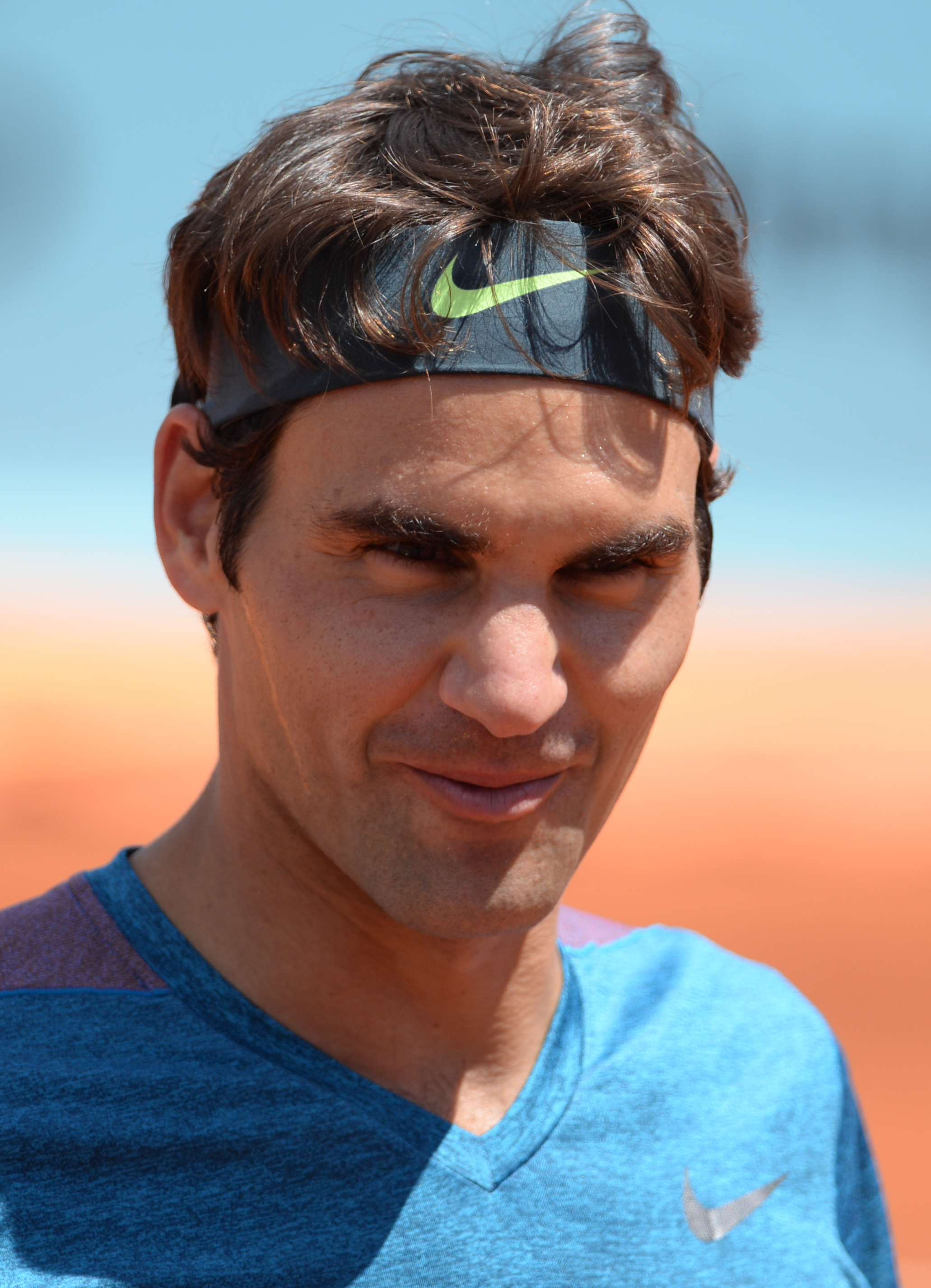
Roger Federer
Tennis Player
About Roger Federer
Roger Federer - Quick Facts
| Born | 8 August 1981 (age 44), Basel, Switzerland |
|---|---|
| Height | 1.85 m (6 ft 1 in) |
| Country (sports) | Switzerland |
| Residence | Valbella, Switzerland |
| Turned pro | 1998 |
| Retired | 23 September 2022 |
| Plays | Right-handed (one-handed backhand) |
| Prize money | US$130,594,339, 3rd all-time in earnings |
| Int. Tennis HoF | 2026 (member page) |
| Official website | rogerfederer.com |
| Career record | 1251–275 (82%); 131–93 (58.5%) |
| Career titles | 103 (2nd in the Open Era); 8 |
| Highest ranking | No. 1 (2 February 2004); No. 24 (9 June 2003) |
| Australian Open | W (2004, 2006, 2007, 2010, 2017, 2018); 3R (2003) |
| French Open | W (2009); 1R (2000) |
| Wimbledon | W (2003, 2004, 2005, 2006, 2007, 2009, 2012, 2017); QF (2000) |
Profile Overview of Roger Federer
Roger Federer ( FED-ər-ər;; born 8 August 1981) is a Swiss former professional tennis player. He was ranked as the world No. 1 in men's singles by the Association of Tennis Professionals (ATP) for 310 weeks (second-most of all time), including a record 237 consecutive weeks, and finished as the year-end No. 1 five times. Federer won 103 singles titles on the ATP Tour, the second most since the start of the Open Era in 1968, including 20 major men's singles titles (among which a record eight men's singles Wimbledon titles, and an Open Era joint-record five men's singles US Open titles), 28 Masters and six year-end championships.
This profile of Roger Federer covers Early Life and Family Background, 1990s and 2000s, 2010s, 2020s and Rafael Nadal.
For nearly two decades, Federer was a leading figure in men's tennis alongside Rafael Nadal and Novak Djokovic, collectively known as the Big Three. A Wimbledon junior champion in 1998 and former ball boy, Federer won his first major singles title at Wimbledon in 2003 at age 21. For the next several years Federer was the dominant player in men's tennis, playing in 20 out of 24 major singles finals between 2004 and 2009. He won three of the four majors and the Tour Finals in 2004, 2006, and 2007, as well as five consecutive titles at both Wimbledon and the US Open. Federer completed the career Grand Slam at the 2009 French Open after three consecutive runner-up finishes to Nadal, his main rival until 2010. At age 27, he surpassed Pete Sampras's record of 14 major men's singles titles at Wimbledon in 2009.
Federer and Stan Wawrinka led the Switzerland Davis Cup team to their first title in 2014, following their Olympic doubles gold victory at the 2008 Beijing Olympics. He also won a silver medal in singles at the 2012 London Olympics, finishing runner-up to Andy Murray. After a half-year hiatus in 2016 to recover from knee surgery, Federer returned to tennis, winning three more majors over the next two years, including the 2017 Australian Open over Nadal and a record eighth singles title at the 2017 Wimbledon Championships. At the 2018 Australian Open, Federer became the first man to win 20 major singles titles and shortly after the oldest ATP world No. 1 at the time, at age 36. In September 2022, he retired from professional tennis following an appearance at the Laver Cup.
A versatile all-court player, Federer's grace on the court made him popular among tennis fans. Originally lacking self-control as a junior, he transformed his on-court demeanor to become well-liked for his graciousness, winning a record 13 Stefan Edberg Sportsmanship Awards and a record 19 consecutive ATP Fans' Favourite awards from 2003 to 2021, Federer was awarded the Laureus World Sports Sportsman of the Year a joint record five times and was named one of Time's 100 most influential people in the world twice in 2007 and 2018. Outside of competition, Federer played an instrumental role in the creation of the Laver Cup team competition. He is also an active philanthropist, having established the Roger Federer Foundation, which targets impoverished children in southern Africa, and raising funds in part through the Match for Africa exhibition series. By the end of his career, Federer was listed by Forbes as one of the world's ten highest-paid athletes 12 times and ranked first among all athletes with $100 million in endorsement income in 2020. In August 2025, estimates published by Forbes indicated that Federer, with a net worth of $1.1 billion, boosted by his minority stake in Swiss shoe and apparel brand On, had become the seventh billionaire athlete in history.
Early Life and Family Background of Roger Federer
Federer was born on 8 August 1981 in Basel, Switzerland. A member of the Federer family, his Swiss father, Robert Federer, is from Berneck in the canton of St. Gallen and his Afrikaner mother, Lynette Federer (née Durand), is from Kempton Park, Gauteng, in South Africa. He has one sibling, his older sister, Diana, the mother of twins. Since Federer's mother is South African, he holds both Swiss and South African citizenship. He is related to Swiss prelate Urban Federer as well as Swiss politician and philanthropist Barbara Schmid-Federer.
As youngsters, Federer and his elder sister Diana used to accompany their parents, both of whom worked for Ciba-Geigy Pharmaceuticals, to the company's private tennis courts at the weekends, where he first played tennis at the age of three.
Soon after enrolling in school at the age of six, Federer became the best in his age group. Feeling that Federer had outgrown the Ciba club and needed to be amongst better juniors, his mother Lynette enrolled him at age eight in the elite junior programme of the Old Boys Tennis Club in Basel, where he received his initial tennis instruction from veteran Czech coach Adolf Kacovsky. Federer began using a one-handed backhand from an early age not only because Kacovsky was a fan of it, but also because all of his childhood idols — Stefan Edberg, Boris Becker, and later Pete Sampras — used the stroke too. From ages 8 to 10, Federer received group and individual training from Kacovsky. At age 10, Federer began being taught at the club by Australian former tennis player Peter Carter. Federer has credited Carter for his "entire technique and coolness".
Federer grew up playing many sports, such as badminton, basketball, football, and tennis, but he was most taken by the latter two. He also tried skiing and swimming and spent hours playing soft tennis on the street. He credits his hand–eye coordination to the wide range of sports he played as a child. In 1993, Federer won the under-12 Swiss national junior championships in Lucerne. Becoming the best junior in the country helped him decide to become a professional tennis player, so he stopped playing football at age twelve to concentrate solely on tennis, where he felt he had more control over his victories or defeats, as opposed to team sports where he relied more on the performances of his teammates. Federer was also a ball boy at his hometown Basel event, the Swiss Indoors in 1992 and 1993, and even received a medal after the 1993 final, together with the other ballboys, from tournament champion Michael Stich.
He was brought to train at the Swiss National Tennis Center, then located in Ecublens in the canton of Vaud, between 1995 and 1997. It was in this new setting that he learned French at the age of 14. He completed his compulsory education at La Planta secondary school in Chavannes-près-Renens and obtained his certificate in July 1997, in the upper division, commercial studies section.
Source: adapted from Wikipedia (https://en.wikipedia.org/wiki/Roger_Federer), text available under CC BY-SA 4.0.
Biography
Gallery